Views: 0 Author: Site Editor Publish Time: 2025-10-23 Origin: Site


When it comes to manufacturing, choosing the right press can make all the difference. Hydraulic Press vs Mechanical Press – which one is right for your business?
In this article, we'll explore the key differences between hydraulic and mechanical presses. You'll learn about their unique benefits, limitations, and how each press performs in various applications.
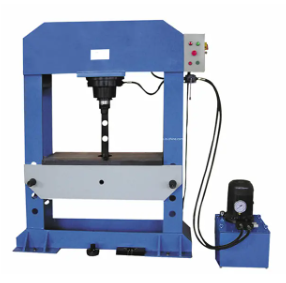
A hydraulic press is a machine that uses hydraulic pressure to generate force. It operates on the principle of Pascal's Law, which states that pressure applied to an enclosed fluid is transmitted undiminished throughout the fluid. This allows hydraulic presses to exert a consistent force over a large surface area, making them ideal for tasks that require precision and adaptability.
Hydraulic presses use a hydraulic cylinder, powered by pressurized fluid, to create force. The fluid is pumped into a cylinder, where it moves a piston. The piston applies force to the material placed between the two platens. The pressure is adjustable, which gives operators control over the force being applied.
Versatility: Hydraulic presses are versatile and can handle a variety of tasks, including molding, shaping, and forming different materials with varying thicknesses.
Customizable Pressure: Unlike mechanical presses, hydraulic presses allow the operator to adjust the pressure output. This level of control ensures precise results for tasks that require varying levels of force.
Precision: Hydraulic presses are ideal for complex operations where precision and consistent pressure are crucial.
Speed: One of the major drawbacks of hydraulic presses is their relatively slower operating speed compared to mechanical presses. While they offer excellent force control, they are not the best choice for high-speed production.
Maintenance: Hydraulic presses require more frequent maintenance than mechanical presses due to the complexity of their hydraulic systems. This can lead to increased downtime and higher operational costs.
Hydraulic presses are used in various industries, including automotive, aerospace, and metalworking. Their adaptability makes them particularly useful for tasks that involve complex material handling, such as forming and molding intricate shapes.
A mechanical press uses a mechanical drive, typically a motor and flywheel system, to generate force. Unlike hydraulic presses, which rely on fluid pressure, mechanical presses use rotating motion to apply force to the material. This press type is often used in high-speed, high-volume production environments where speed and consistency are key.
The mechanical press operates by transferring rotational energy from a motor to a flywheel. The flywheel stores energy and releases it in a controlled manner, applying force to the material through a ram or punch. Mechanical presses are designed to work in cycles, making them efficient for tasks that require repeatability and consistency.
Speed: Mechanical presses can operate at much higher speeds than hydraulic presses, with some models capable of performing up to 1,500 strokes per minute. This makes them ideal for high-volume production where speed is critical.
Efficiency: Mechanical presses are typically more energy-efficient than hydraulic presses because they use less power to operate at high speeds.
Cost-Effectiveness: Mechanical presses generally have lower initial costs and are less expensive to maintain over time compared to hydraulic presses.
Lack of Versatility: Mechanical presses are less versatile than hydraulic presses. They operate at fixed speeds and forces, making them less suitable for tasks that require adjustable pressure or delicate handling.
Higher Initial Cost: While mechanical presses are cost-effective in the long term, their initial cost can be higher than hydraulic presses, making them less accessible for smaller operations.
Mechanical presses are widely used in industries such as automotive and appliance manufacturing, where high-speed, high-volume metal stamping is required. Their ability to perform repetitive tasks efficiently makes them ideal for these types of operations.
Speed: Mechanical presses outperform hydraulic presses in terms of speed. They are capable of handling high-speed tasks, making them suitable for mass production environments. In contrast, hydraulic presses are slower but offer more control over the force applied.
Precision: Hydraulic presses excel in precision. They offer adjustable pressure and force control, making them ideal for tasks requiring intricate shaping or forming. Mechanical presses, while precise in their repeatability, do not offer the same level of control over pressure.
Force Generation: Hydraulic presses provide consistent force over the entire stroke, which is essential for tasks like deep drawing and molding. Mechanical presses apply force in a fixed cycle, which can limit their flexibility for some applications.
Initial Cost: Mechanical presses tend to have a higher initial cost compared to hydraulic presses. However, they may be more affordable in the long term due to lower maintenance costs.
Maintenance: Hydraulic presses require more frequent maintenance due to their complex hydraulic systems. Mechanical presses, with fewer moving parts, are generally easier to maintain and have lower long-term maintenance costs.
Hydraulic presses are more versatile and can handle a wider range of tasks, such as molding, shaping, and forming various materials. They are ideal for industries that require flexible production processes. Mechanical presses, on the other hand, are best suited for high-speed, repetitive tasks like stamping and punching in industries such as automotive manufacturing.
Servo presses combine the best features of hydraulic and mechanical presses. They use a servo motor to control the press, offering precise control over speed, position, and force. Servo presses provide the flexibility of hydraulic presses with the speed and efficiency of mechanical presses, making them an ideal choice for modern manufacturers looking to optimize their production processes.
Adjustable Stroke and Speed: Servo presses offer customizable stroke lengths and speeds, making them adaptable to a wide range of applications.
Energy Efficiency: Servo presses are more energy-efficient than both hydraulic and mechanical presses because they consume power only when the press is in motion.
Reduced Operational Costs: Servo presses require less maintenance than hydraulic presses, which leads to cost savings in the long term.
In this article, we explored the key differences between hydraulic and mechanical presses. Hydraulic presses offer precision and adaptability, ideal for complex tasks. Mechanical presses excel in high-speed production with reliability. When choosing a press, consider your manufacturing goals and needs. Modern advancements, like servo presses, bring further flexibility. For businesses seeking a reliable solution, TSD offers innovative presses, including the versatile Hydraulic Press, to enhance production efficiency and precision.
A: A hydraulic press uses fluid pressure for force generation, offering versatility and precision, while a mechanical press uses a flywheel and motor, excelling in high-speed production.
A: Choose a hydraulic press for applications requiring varying pressures and high precision, such as molding or shaping materials with different thicknesses.
A: Hydraulic presses are generally slower than mechanical presses but offer better control over pressure, making them ideal for intricate tasks rather than high-speed production.